About Cloth Config API
Cloth Config API is a lightweight library enabling Minecraft mods to create user-friendly configuration screens. It provides tools for developers to add settings, sliders, and toggles without complex coding.
Mods using Cloth Config API offer easier access to settings, allowing players to tweak options like graphics quality or automation levels without diving into files.
Ideal for modpack creators and players who value customizable experiences, especially in complex modpacks with many configuration options.
Integrates seamlessly with other mods, ensuring consistent UI elements and reducing conflicts, making modpack management more efficient.


Features
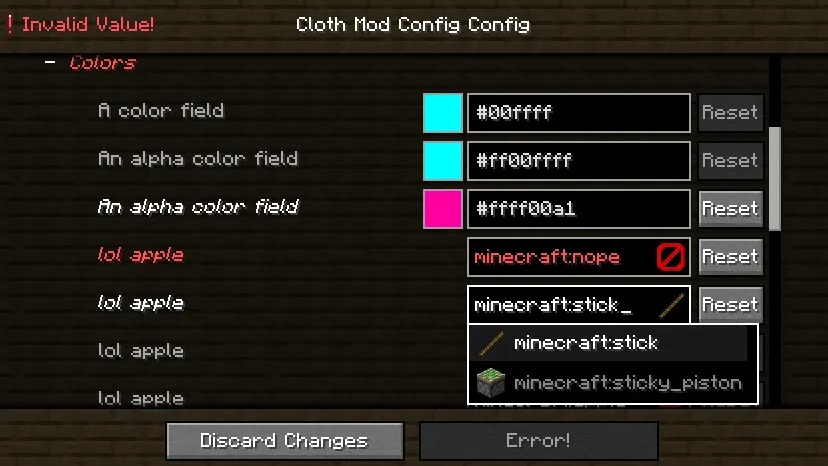
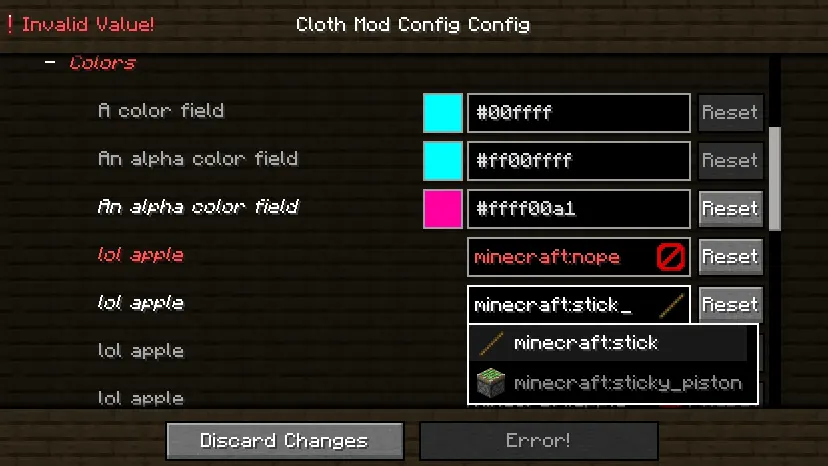
- Provides UI elements for mod settings (sliders, toggles, text fields)
- Supports Fabric, Forge, and NeoForge loaders
- Works with Minecraft 1.14 to 26.3
- No required dependencies for mod developers
- Client and server sides optional
- Simplifies configuration screen creation for developers
- Offers consistent UI across different modpacks
- Eases mod integration with existing settings systems
Tips
- Start with basic settings like graphics or performance options for modpacks
- Use sliders for balance tweaks in complex mods
- Check loader compatibility (Fabric/Forge/NeoForge) before adding
- Test config screens on both client and server if using multiplayer features
- Ensure mod versions align with supported Minecraft ranges
How to install
- Install Fabric / Forge / NeoForge for your Minecraft version (use the official installer).
- Download the file that matches your Minecraft version and Fabric / Forge / NeoForge.
- Open the .minecraft folder and put the file into the "mods" folder (create it if missing).
- Launch Minecraft with the Fabric / Forge / NeoForge profile.
FAQ
Which Minecraft versions does Cloth Config API support?
It works with 1.14 to 26.3, including latest 26.3, 26.2, and 1.21.11.
Does it require any dependencies?
No, it’s a standalone library with no required dependencies.
Can it be used with both client and server sides?
Yes, both are optional, allowing flexible mod integration.